
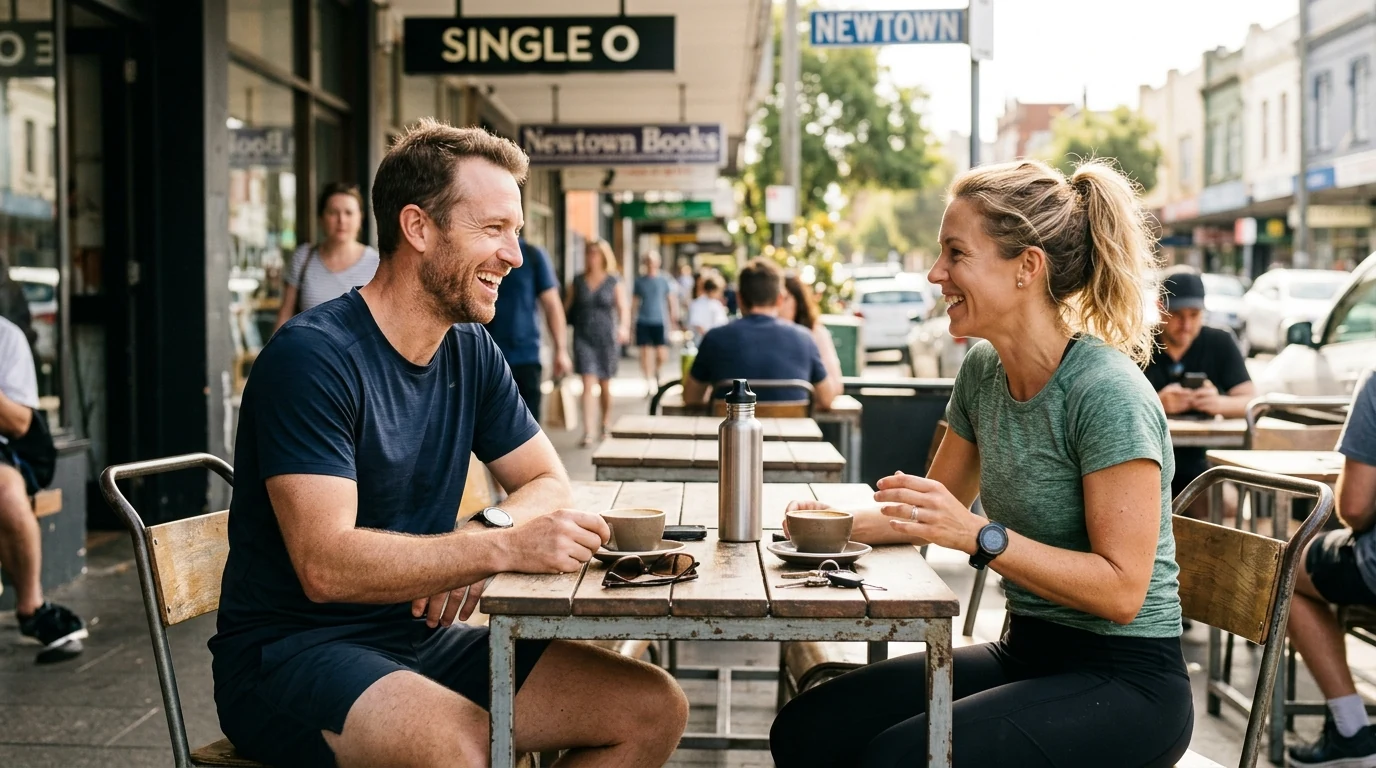
If you live an active life, you already know that attraction is not enough. A great first date can still turn into a frustrating relationship if your daily habits, energy levels and plans for the future pull in different directions.
That matters even more in Sydney, where work can run long, travel across the city eats up time, and weekends tend to fill fast. If you care about training, recovery, eating well and using your free time properly, you need more than someone who says they “like fitness”. You need someone whose life works in a similar way.
Long-term compatibility for active singles is often less romantic on paper than people expect. It is built from ordinary things. How they spend a Saturday morning. Whether they respect your routine. Whether they communicate clearly when life gets busy. Whether they want a relationship that fits into real life in New South Wales, not a fantasy version of it.
If you have dated enough, you have probably felt the cost of getting this wrong. You try to make the mismatch sound small. One person loves structure, the other hates plans. One person wants to be up early for a coastal walk or training session, the other wants every weekend to start at midday. Neither person is bad. The fit is off.
That is also why some active singles prefer a matchmaker Sydney approach over endless app browsing. It gives more weight to lifestyle and values before anyone wastes weeks messaging or meeting people who were never a realistic fit.
If privacy matters to you while dating, especially if you are established professionally or known in your circles, this piece on why privacy matters for serious singles in Sydney is worth your time. It explains why the way introductions are handled changes the whole experience.
Look for real lifestyle compatibility, not vague interest
Plenty of people describe themselves as active. That word is too broad to be useful on its own.
Ask better questions. What does active mean in practice? Gym four times a week? Social sport? Hiking once a month? Early beach swims? A disciplined training routine during the week and relaxed Sundays? There is no right answer, but there does need to be honesty.
Lifestyle compatibility is not about having identical hobbies. You do not need someone who trains in the same way or at the same intensity. You do need someone who understands why movement is part of your life and does not quietly resent the time it takes.
Good signs include:
- They make time for their own health without turning it into a personality performance.
- They respect your routines, even when they do not share every one of them.
- They can join your world sometimes, and invite you into theirs without pressure.
- They do not frame exercise, healthy eating or recovery as boring, obsessive or optional if it matters to you.
One of the biggest traps is dating someone who likes the idea of your lifestyle more than the reality of it. They enjoy that you are disciplined, confident and healthy, but they are annoyed when that discipline affects dinner plans, alcohol, sleep or spontaneous late nights. That gets old fast.
Pay attention to how they handle time
Time is one of the clearest signals of long-term fit. Active, established singles usually have full weeks. Work, family, training, social commitments and travel all compete for the same limited space.
You want a partner who can work with that reality.
This does not mean they need a colour-coded calendar. It means they are reliable. They plan ahead. They tell you when they are busy. They follow through. They do not create chaos and then call it spontaneity.
In Sydney, this matters more than people admit. A date can involve a lot of logistics. If someone is consistently vague, late, flaky or impossible to pin down, it is not a minor annoyance. It is a preview.
Watch how they treat your time early. Someone who respects your schedule on date two is more likely to respect your life six months in.
Choose values over surface-level similarity
Shared interests help. Shared values carry the relationship when life gets harder.
For active singles looking for something long term, the values worth noticing often include self-respect, consistency, honesty, responsibility and kindness under pressure. Not just when things are easy.
Ask yourself:
- Do they mean what they say?
- Can they have a direct conversation without shutting down or turning defensive?
- Do they treat other people well when nothing is to be gained?
- Are they emotionally steady, or do you feel like you are always adjusting around them?
Fitness can disguise poor relationship habits for a while. Someone can look disciplined on the outside and still be avoidant, inconsistent or self-absorbed in dating. A polished image is not the same thing as character.
I think this is where many smart singles lose time. They over-credit chemistry and under-credit values because values sound less exciting. Then they end up dealing with the same conflict in different packaging.
Look for someone who can communicate without games
Good communication is not about saying everything perfectly. It is about being clear enough that the other person does not have to guess what is happening.
For active professionals, this is a big one. If both people are busy, mixed signals become exhausting quickly. You want someone who can say, “I am interested,” “I need a quiet night,” “This week is full,” or “I do not think we are the right fit,” without vanishing, hedging or keeping backup options warm.
Long-term relationships need this kind of steadiness. Plans change. Work gets messy. Someone gets injured. Family needs attention. If a person cannot communicate properly in the easy stage, they will not become magically better when the stakes are higher.
Look for plain, adult communication:
- They reply in a reasonable time and do not disappear when things become real.
- They are direct about interest and intention.
- They can talk through minor tension without making it dramatic.
- They listen, not just wait for their turn.
You are not looking for perfect wording. You are looking for emotional maturity.
Notice whether they support your goals or compete with them
A good long-term partner does not need to copy your ambitions. They should be comfortable with them.
That applies to career goals, health goals and personal standards. If you are serious about your wellbeing, you will probably keep certain routines even when life gets busy. The right partner respects that. They do not mock it, chip away at it or act threatened by it.
This can show up in small ways. They encourage your training block instead of sulking about it. They are fine with a date that is a walk, a coffee after Pilates, or dinner somewhere that suits how you eat. They do not turn every healthy choice into a negotiation. For many serious singles, the deciding factor is privacy in Sydney dating, not just access to more profiles.
And support goes both ways. You should be able to respect what matters to them too. The point is not to build a relationship where one person wins and the other adapts. It is to build one where both people have room to stay themselves.
Make sure your pace and relationship goals match
Active singles who want something serious often get stuck in a strange middle ground. One person wants a genuine relationship. The other likes companionship, attention and chemistry, but avoids any clear direction.
This mismatch wastes months.
A long-term partner does not need to rush. They do need to be on the same page about what they are building. If you want a committed relationship, that should be discussable without anyone acting cornered.
Ask simple questions early enough to matter. What are they looking for? How do they usually build trust? What does commitment mean to them in practice? How have they handled relationships when work becomes intense?
The answers do not need to be polished. They do need to be real.
If you are tired of endless options and low-intent dating, why fewer better dates work better than endless swiping in Sydney explains why a smaller number of well-matched introductions often leads to better decisions.
Do not ignore recovery, downtime and social style
People talk a lot about fitness compatibility and not enough about recovery and rest. But the shape of downtime often tells you whether daily life together will feel easy or draining.
Some people need a packed social calendar to feel good. Others need quiet to reset. Some want every meal out, every weekend booked, every public holiday accounted for. Others want a balance of movement, friends, family and genuine rest.
Neither style is wrong. But if your rhythms clash too hard, resentment creeps in.
This is especially true for singles who are health-conscious. Sleep, food, alcohol and recovery are not side issues if you care about how you feel. A partner does not need to live exactly as you do, but there should be enough overlap that your choices do not become a recurring source of friction.
Look for trustworthiness, not just attraction
Attraction gets people in the room. Trust is what makes a long-term relationship workable.
Trustworthiness is not a vague feeling. It shows up in behaviour. They are consistent. Their stories line up. They respect boundaries. They are not pushing for access, intimacy or personal information before trust has been earned. They understand consent. They do not pressure you into moving faster than feels right.
For many established singles, privacy also sits inside trust. If someone is careless with photos, personal details or who knows about your dating life, that is not a small issue. It tells you they may not handle more serious parts of a relationship well either.
This is one reason private matchmaking and curated introductions appeal to people who have outgrown public dating chaos. Screening, ID verification and consent-first photo sharing do not create chemistry, but they can remove a lot of avoidable risk and noise before the first date happens.
Watch how they respond to feedback
No long-term relationship works without adjustment. You will both get things wrong. The question is what happens next.
A strong partner can hear a reasonable concern without collapsing, attacking or pretending not to understand. They can reflect. They can apologise properly. They can change behaviour when it matters.
This is underrated. A person can be attractive, successful and socially polished, but if they cannot take feedback, the relationship has a low ceiling.
Early dating gives you chances to notice this. Bring up something small. See whether they handle it like an adult. You are not testing them. You are paying attention.
Choose someone whose life has room for a relationship
This sounds obvious, but plenty of people want a partner in theory while having no practical space for one.
Maybe they are still tangled with an ex. Maybe work consumes every spare hour. Maybe they chase novelty and get restless when things become steady. Maybe they like dating because it delivers attention without responsibility.
A long-term partner needs more than desire. They need capacity.
That means emotional space, time, honesty about priorities and some willingness to build. If those things are missing, chemistry will not fix it.
What matters most for active singles
If I had to narrow it down, I would say active singles should look for five things in a long-term partner: compatible habits, aligned values, clear communication, respect for time and a genuine readiness for commitment.
The rest matters too. Attraction matters. Shared humour matters. Ease matters. But without those five, relationships start to feel like work in the wrong way.
You are not looking for a clone. You are looking for someone whose life, character and intentions fit well enough that the relationship can breathe. Someone who likes the life you live, not just the image of it. Someone who can meet you there consistently.
That is a better standard than chasing sparks and hoping the practical parts sort themselves out later. Usually, they do not.