
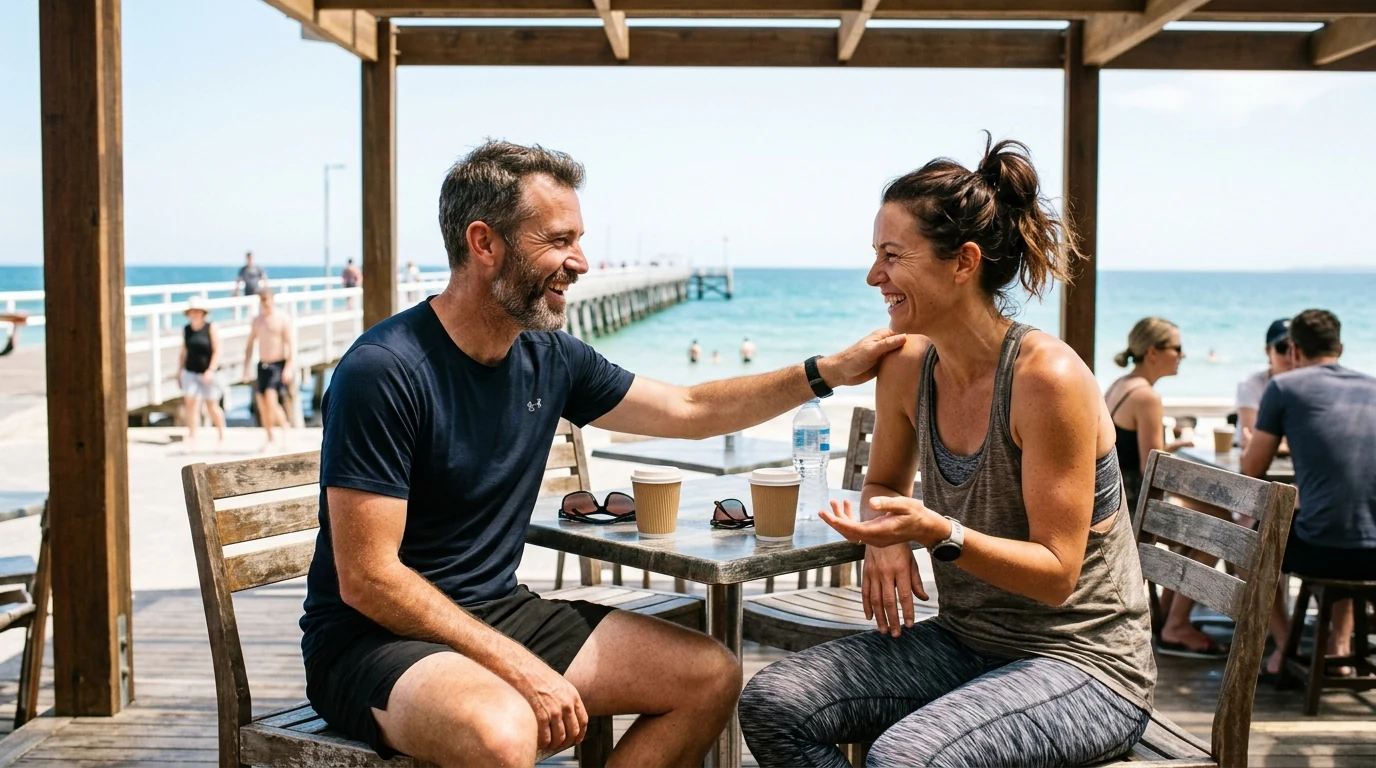
Dating apps promise a wide pool of possibilities, yet many active singles in Adelaide come away with the opposite feeling: plenty of profiles, plenty of messages, and very little movement towards a date that feels worth the effort. That gap can be especially frustrating when you have a full life already. You might train before work, spend weekends outdoors, see friends regularly and care about your health, but finding someone who fits that life through an app can still feel like a second job.
The issue is rarely that active Adelaide singles are asking for too much. Usually, they are trying to make a good decision with thin information, while sorting through people whose intentions, routines and availability are hard to read from a few photos and prompts. Adelaide introductions for active singles take a different route by focusing on a smaller number of considered introductions rather than an endless feed.
Being active means more than liking the gym
On an app, “active” is one of the most overused descriptions around. It can mean a person runs several times a week, plays social sport, hikes often or simply prefers walking over sitting still. It can also be a line added because it sounds appealing. None of those versions is wrong, but they are not interchangeable.
For many people, health and movement shape the ordinary parts of life. They affect how someone spends a Saturday, whether they are happy with an early start, what they eat most of the time and how they recover after a demanding week. A match who has a completely different rhythm may still be appealing. But it helps to know the difference before either person builds up a story around a profile.
Apps flatten these details. A photo from a fun run or a beach walk can tell you that somebody had a good afternoon. It does not tell you whether getting outside is central to their week, whether they enjoy the same pace of life, or whether they would resent the time you give to your own interests. Those answers emerge in conversation, but getting to that conversation is often the hard part.
The volume creates more work, not necessarily more choice
Swiping feels quick until you add up the small decisions. Is that profile current? Does the bio say anything specific? Is the person looking for a relationship, a casual connection or attention after a quiet evening? Should you start the conversation? How long should you keep replying before suggesting a date? Each decision is minor. Do enough of them and the process starts eating into the time you would rather spend doing something else.
Active, established singles can be particularly alert to this cost. They tend to have routines that are already full, whether that includes work, family, training or friendships. They are not short on things to do. The appeal of dating is meeting the right person, not repeatedly opening an app between meetings or after a late session at the pool.
More profiles do not solve the problem if most are poor fits. A large pool can make it easier to delay a decision too. There is always another profile one swipe away, another chat that might become interesting, another person who seems almost right. That constant possibility can make a straightforward invitation feel oddly high stakes, even when neither person has much to lose.
Adelaide’s social overlap changes the calculation
Adelaide is a smaller, connected city. People often share social circles through work, sport, schools, professional networks or long-standing friends. That can be a real advantage when relationships grow naturally. On an app, though, it can make people more guarded.
Seeing a colleague’s former partner, someone from a running club or a familiar face from North Adelaide can make the experience feel less private than it first appears. Some people pause rather than swipe because they do not want an awkward encounter later. Others match, exchange a few messages and then hesitate once the social overlap becomes clear. Neither reaction means a person is unserious. It means the app has placed personal decisions in a city where people can cross paths again.
That caution can leave good people looking detached when they are simply protecting their privacy. It is worth understanding how identity checks and consent protect privacy before deciding what level of personal detail feels comfortable to share with a matchmaking service. Care around photos, names and identifying information matters when discretion is part of the reason someone avoids public profile browsing.
There is another complication. In a close city, many singles assume they have already met everyone compatible, particularly after years of the same work and social routines. That conclusion is usually based on the circles they can see. It leaves out people who live nearby but move through different parts of Adelaide, and people who have no reason to appear in their usual weekend plans.
App profiles reward a polished first impression
Dating apps are built around fast judgement. Photos carry a lot of weight because they are the first thing people see, and a short bio has to do too much work. It has to sound warm, funny, distinctive and clear about intentions, all while avoiding the feeling of a job application. Plenty of decent people dislike that exercise and either keep their profile vague or stop updating it.
This is where active singles can be misread. A profile full of race medals, mountain views and training photos may seem intense to one person and disciplined to another. A profile with none of that may be taken as evidence that fitness does not matter, even when the person simply does not want to turn their hobbies into a personal brand.
There is no perfect way to present a real life in six photos. People are more complicated than that. Someone who enjoys trail walks in the Adelaide Hills may also want a quiet Sunday at home. Someone who loves a structured training plan may be relaxed and spontaneous in every other part of life. Apps push people towards a quick read, and quick reads are often wrong.
Chats can create momentum without clarity
A good chat is pleasant, but it is not the same as progress. Many app conversations begin well and then drift. A reply arrives two days later. Someone asks another generic question. One person is talking to several matches and loses track. Eventually the conversation fades without either person doing anything obviously rude.
This pattern is tiring because it asks for emotional energy in small instalments. You share a few details, make an effort to be engaging, and begin to wonder whether there is potential. Then silence. After enough repeats, people become more guarded. They reply less warmly, avoid asking real questions or stop suggesting dates because they expect the conversation to disappear anyway.
For someone who wants a relationship, that guardedness is a problem. It can keep the app manageable, but it also makes it harder for a promising connection to get past surface-level banter. The person on the other side may read your caution as lack of interest, when it is really fatigue.
Busy schedules expose weak intent quickly
People with active lives often need a little notice to make plans. That is normal. A week may include early training, demanding workdays, family commitments and one or two evenings set aside for friends. If somebody only suggests a last-minute drink after 8 pm, it can be hard to tell whether they are flexible or simply not making much effort.
Apps can make this worse by encouraging low-commitment invitations. A person can send the same vague message to several matches, then choose whichever option is easiest. The recipient may be left guessing whether a date is genuinely wanted or merely convenient. That ambiguity is not a great foundation for two people who are trying to use their time well.
A more intentional dating process does not require rigid rules or a packed calendar. It requires enough honesty to know whether both people are open to meeting, and enough respect to make a clear plan between themselves once they are. If either person is not interested in proceeding, declining before a first date is better than dragging out a lukewarm conversation.
Compatibility is broader than shared hobbies
It is tempting to search for a mirror image: another runner, another gym regular, another person who spends every long weekend outdoors. Shared interests can make a first conversation easier, but they do not carry a relationship on their own. The useful question is whether two people respect each other’s routines and enjoy the way their lives fit together.
Someone might be active in a different way. One person could prefer cycling along the Torrens Linear Park while the other plays team sport. They may still agree about making room for movement, eating well without becoming rigid, and getting out of the house when the week has been too desk-bound. Those are more useful things to understand than whether they own the same gear.
The same applies to broader relationship expectations. Are both people looking for something committed? Do they communicate directly? Are their work patterns compatible enough to see each other? Do they have room for another person in their life? Apps can hold some of this information, but they rarely make it easy to assess.
Why a curated approach can feel less draining
Matchmaking is not a shortcut to instant chemistry. No service can promise that. It can, however, remove parts of app dating that many people find wasteful: public browsing, repeated profile judgement and conversations with people whose basic intentions are unclear.
At Find Fit Love, applicants complete a detailed written questionnaire so we can understand their lifestyle, relationship goals and what matters to them in a partner. We screen applicants and identity check them. We share photos and details only with consent. There is no public catalogue of profiles for strangers to browse.
When we see a possible fit, both people can consider the introduction before anything moves forward. Either person can decline at that point, with no cost. The $350 fee including GST per person is charged only when both people opt in and a first date is confirmed. After that, the two people organise the details directly with each other.
This structure suits people who would rather have fewer introductions with a reason behind them. It also leaves room for ordinary human judgement. A questionnaire can identify useful common ground, but it cannot tell two people how a conversation will feel in person. That part still belongs to them.
A smaller dating pool does not mean settling
Some Adelaide singles stay on apps because they worry a more selective route will make their options too narrow. The concern is understandable. But a visible pool is not the same as an available pool, and an available pool is not the same as a suitable one. Hundreds of profiles can still produce very few people who are genuinely ready and compatible enough to meet.
Dating well in a smaller local pool often depends on being clearer about the non-negotiables and more flexible about the details that do not affect daily life. That does not mean lowering standards. It means separating the things that will cause ongoing friction from the preferences that may matter less once you know someone properly.
For active singles, this can be a relief. You do not need to find somebody with an identical routine. You need someone who understands why your routine matters, has a life they are happy to share, and is prepared to show up with genuine interest.
Knowing when the app has run its course
There is nothing wrong with using dating apps. They work well for some people, and a good match can begin anywhere. The trouble starts when the process repeatedly leaves you flat, distracted or more cynical than you want to be. If every swipe feels like admin and every chat feels disposable, continuing in exactly the same way is a stretch.
Taking a more considered approach does not make dating effortless. It does mean your time is spent with more context, more privacy and a clearer reason for each introduction. For Adelaide singles who have built full, active lives, that can be a better use of the limited space they are willing to make for dating.